1 Dec 2025

Introduction
Let me guess. You rolled out Microsoft Copilot to your team 6 months ago. Maybe you got swept up in the hype. Maybe your IT team pushed for it. Maybe you just thought, "We're a Microsoft shop, this makes sense."
So you bought the licenses. Sent out some emails. Maybe ran a lunch-and-learn or two. And then... nothing much happened.
A few people started using it. Most didn't. The ones who did are mostly just summarising emails and generating meeting notes. Which is fine, but it's not exactly the transformation you were promised.
Sound familiar? You're not alone. This is the story I hear from almost every mid-sized organisation I talk to.
The "Bought Licenses and Hoped" Problem
Here's the uncomfortable truth. The reason your Copilot rollout isn't working has nothing to do with Copilot.
The technology is genuinely impressive. It can draft documents, analyse data, summarise long email threads, generate presentations, write code, and help you think through complex problems. It's legitimately useful.
The problem is that most people have no idea how to use it properly. And "properly" doesn't mean knowing which buttons to click. It means understanding how to interact with AI in a way that gets good results.
This is a fundamentally different kind of technology to anything your team has used before. It's not like learning a new CRM or switching from one project management tool to another. Those tools are deterministic. You click a button, the same thing happens every time.
AI doesn't work that way. It's probabilistic. The quality of what you get out depends entirely on what you put in, and on whether you know how to refine and iterate. Most people don't. So they try it once, get a mediocre result, and go back to doing things the old way.
This Isn't The Copilot You Tried Last Year
Here's something important that often gets missed. If you or your team tried Copilot a year ago and walked away unimpressed, you were using a completely different product.
Copilot today is a different beast. Microsoft has integrated the latest GPT and Anthropic models, and the improvement is dramatic. The responses are sharper. The reasoning is better. The ability to handle complex, nuanced tasks has jumped significantly.
I talk to a lot of people who got burned trying Copilot in its early days. They asked it to do something, got a rubbish response, and concluded it wasn't ready. That conclusion was probably right at the time. It's not right anymore.
The technology has moved fast. Genuinely fast. What was clunky and unreliable six months ago is now genuinely insanely good. But if your team's mental model is still based on that disappointing experience from a year ago, they're not going to give it another serious go.
That's part of the capability gap. People don't know what they don't know, and they don't know how much the tools have improved.
What "Good" Copilot Usage Actually Looks Like
The gap between average users and top 1% users is enormous. And it's not because top users are smarter or more tech-savvy. It's because they've developed specific habits and approaches that get better results.
Top users don't just ask Copilot to "summarise this document." They give it context. They tell it what they're trying to achieve. They ask follow-up questions. They iterate on outputs instead of accepting the first thing they get.
Top users also know where Copilot is brilliant and where it falls over. They know not to trust it with calculations without checking. They know it can hallucinate facts. They know when to use it as a starting point versus when to use it as a thinking partner.
Most importantly, top users have integrated AI into their daily workflow. It's not a novelty they use occasionally. It's how they work. Every document starts with AI. Every complex email gets a thinking partner. Every analysis gets a second opinion.
These users save 40 to 60 minutes per day, minimum. That's not marketing fluff. That's what the research shows, and it matches what I see in the organisations I work with.
Why the Lunch-and-Learn Approach Doesn't Work
So why didn't your launch emails and training sessions create these kinds of users?
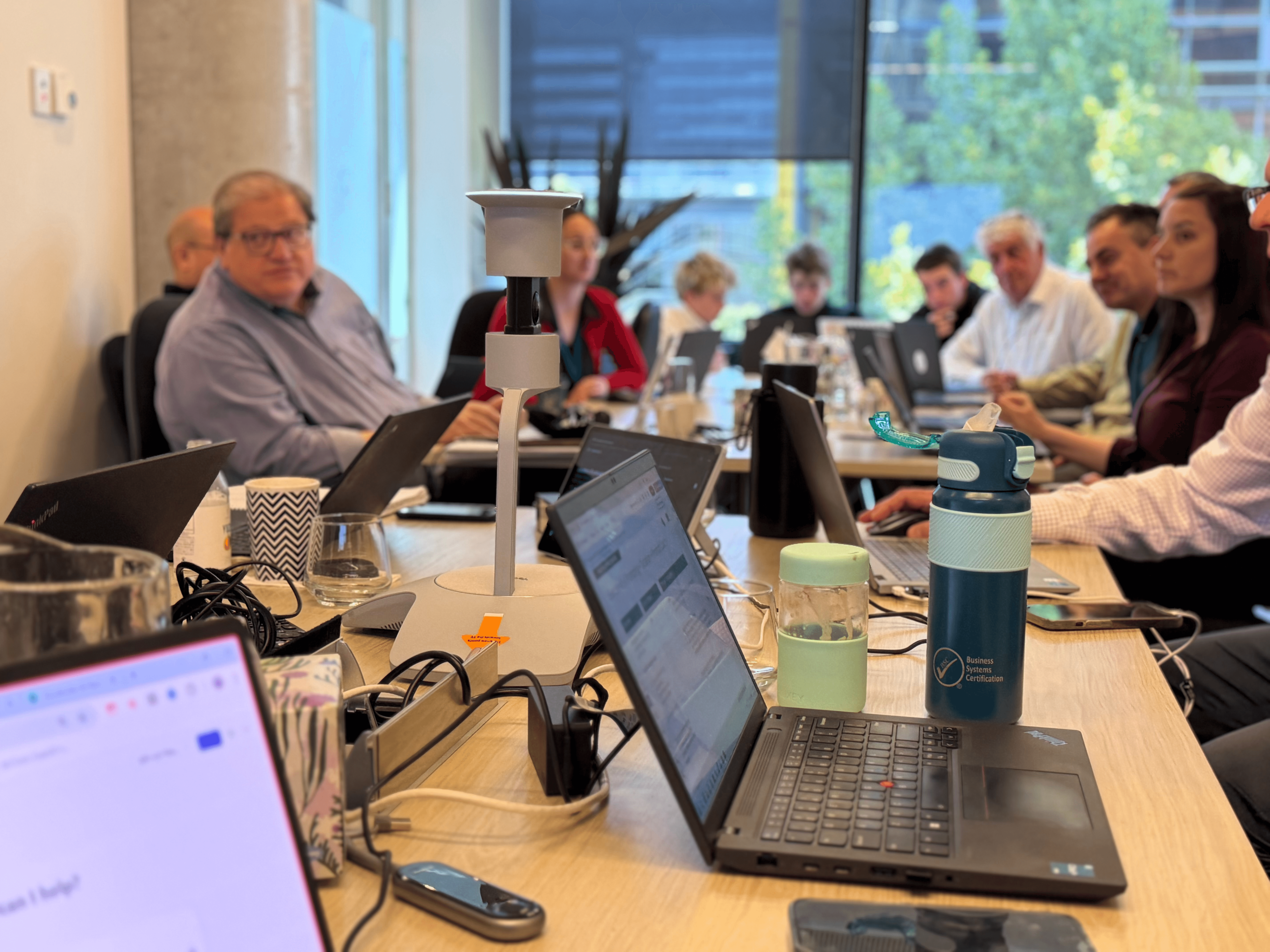
Because building genuine AI capability takes more than a one-hour overview. It takes structured practice with real problems. It takes ongoing support as people try and fail and try again. It takes someone in the room who can show them what good looks like and help them build the habits that stick.
A lunch-and-learn might spark some initial interest. But interest fades. Within a week or two, most people are back to their old ways because they never built the muscle memory that turns occasional use into habitual use.
This isn't a criticism of your team or your approach. It's just how skill development works. You can't learn to drive by watching a YouTube video. You can't learn to play guitar in an afternoon. And you can't become a confident AI user from a single training session.
The Leadership Problem Nobody Talks About
There's another issue that's often the real blocker, and it's awkward to talk about. If your leadership team isn't using Copilot confidently, your broader rollout is dead in the water.
This isn't about sending a message or "leading by example" in some abstract corporate sense. It's practical. When staff see that their CEO or GM doesn't use AI, they get a very clear signal. It's not important. It's optional. It's something for the tech-curious, not for serious business people.
On the flip side, when leaders genuinely use AI, when they reference it in meetings, when they share examples of how it helped them make a decision or prepare a board paper, something shifts. Suddenly it's not a toy. It's a tool that serious people use for serious work.
Leaders also control the resources. If they're not convinced AI matters, the investment in training and capability building won't happen. Or it'll be half-hearted. A tick-box exercise rather than a genuine commitment to change.
What Actually Works
If you want to get real value from your Copilot investment, here's what I've seen work in practice.
Start with your leadership team. Get them genuinely capable before you worry about anyone else. Not a demo. Not an overview. Hands-on sessions where they use the tools on their actual problems and build real confidence.
Make it practical, not theoretical. Nobody cares about the architecture of large language models. They care about getting their work done faster and better. Every training session should involve real tools and real problems.
Invest in months, not days. Sustainable capability building takes time. Quick fixes don't stick. Plan for ongoing development, not a one-off event.
Get someone in the room. Online courses have their place, but they don't build capability the way in-person, hands-on training does. You need someone who can read the room, adapt to what people need, and help them through the moments when they get stuck.
Create space for practice. Learning happens between sessions, not just during them. People need time to experiment, fail, and figure things out. Build this into your expectations.
The ROI Question
You might be thinking, "We've already spent the money on licenses. Is it worth investing more in training?"
Let me flip that around. Right now, you're paying for Copilot licenses that aren't being used properly. Every month those licenses cost money, and every month the potential value sits on the table uncaptured.
If your team members could each save an hour a day, and you have 50 people, that's 50 hours per day. 250 hours per week. Over 10,000 hours per year. Even at a conservative hourly rate, the value of capturing that time is enormous.
The investment in proper capability building pays for itself many times over. But only if you actually do it, and do it properly.
What's Next?
If this resonates, the next step is simple. Have a conversation about where you're at and what a structured approach to building AI capability might look like for your organisation.
Not a sales pitch. A genuine discussion about your context, your challenges, and what would actually help.
Book a consultation and let's figure out whether we can help you turn that Copilot investment into something that actually moves the needle.

Andrew Gargiulo
Founder · AI Advisor & Trainer